Aquatic Livelihoods
with Jingyun Li
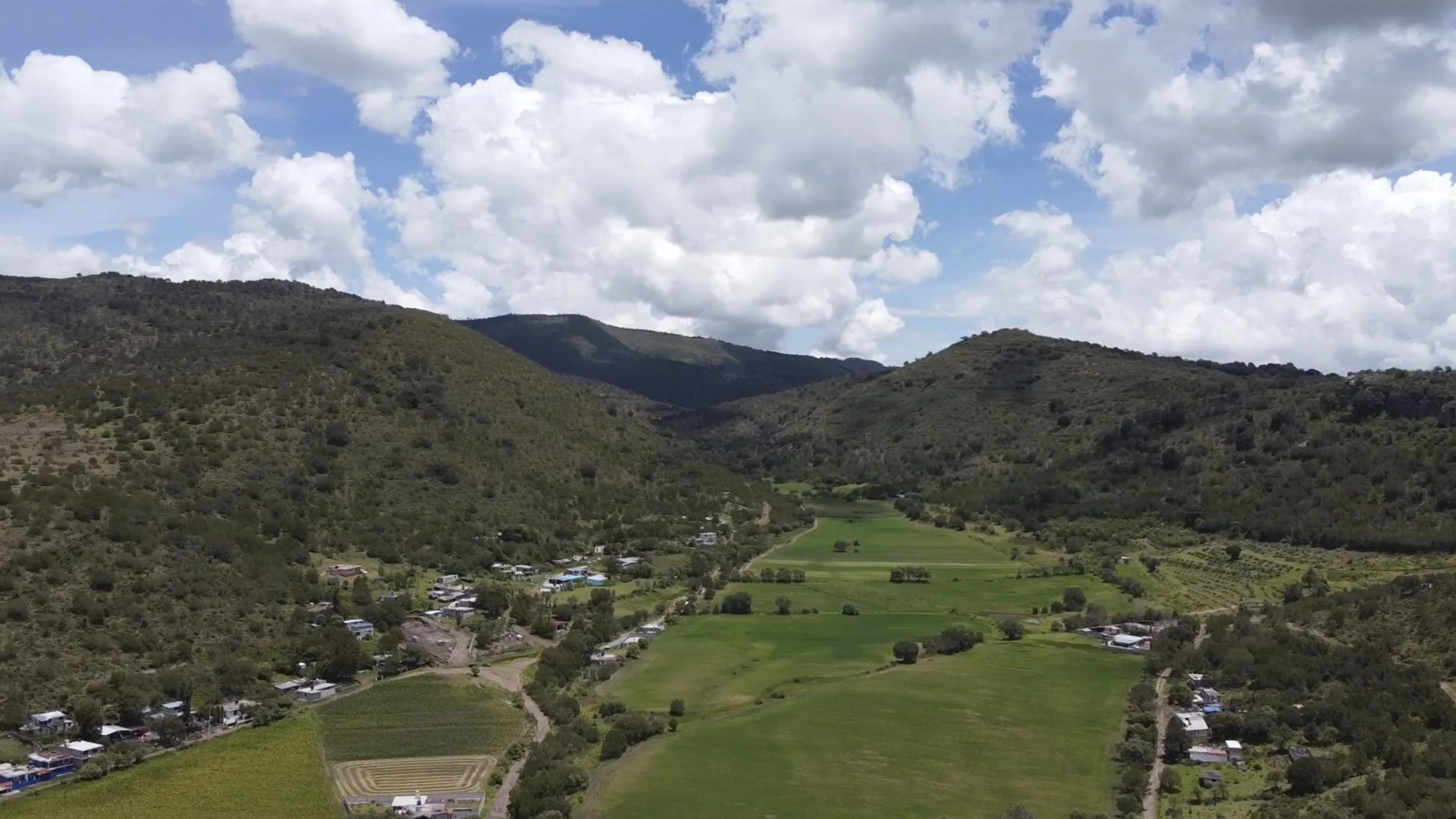
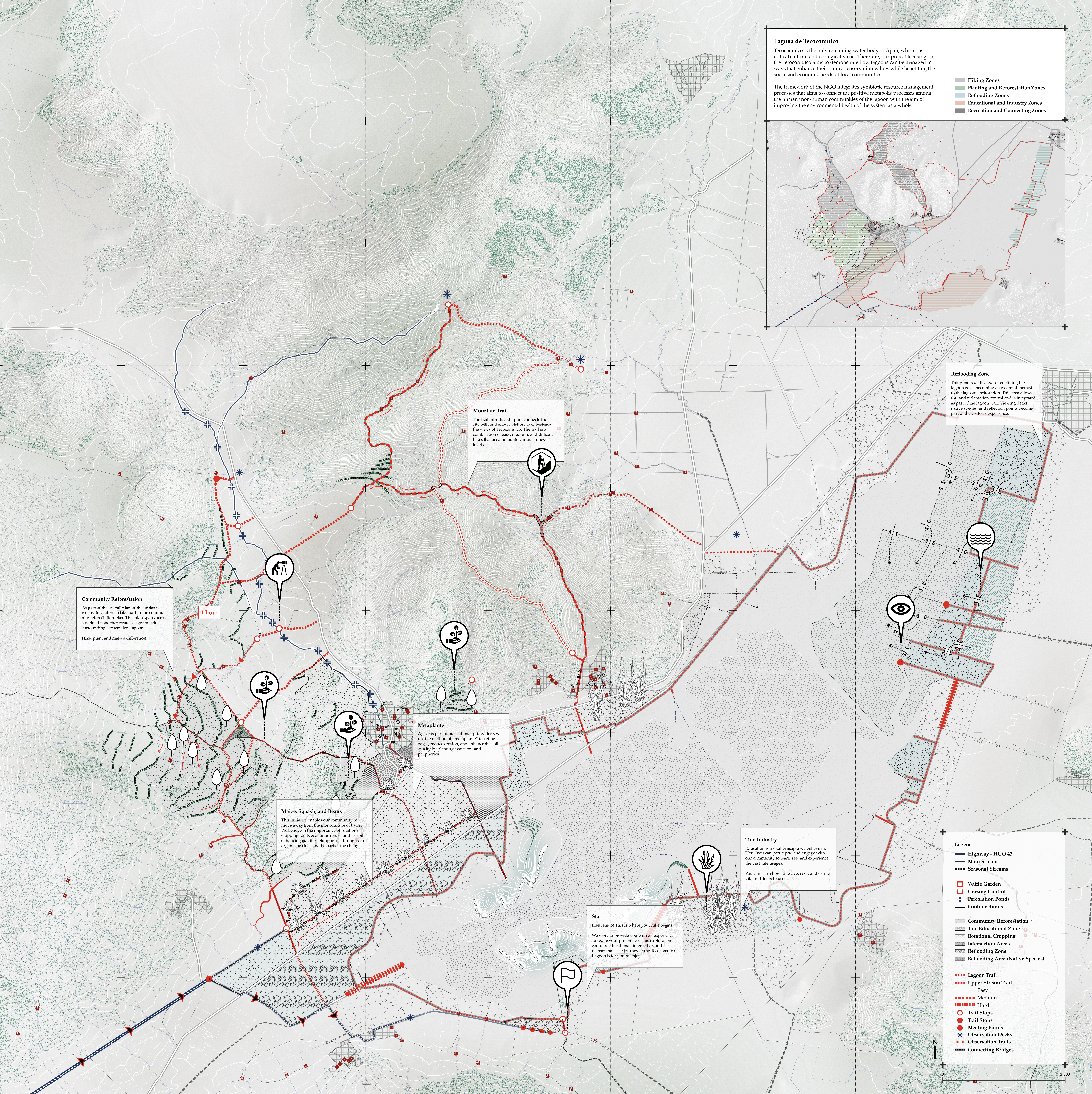
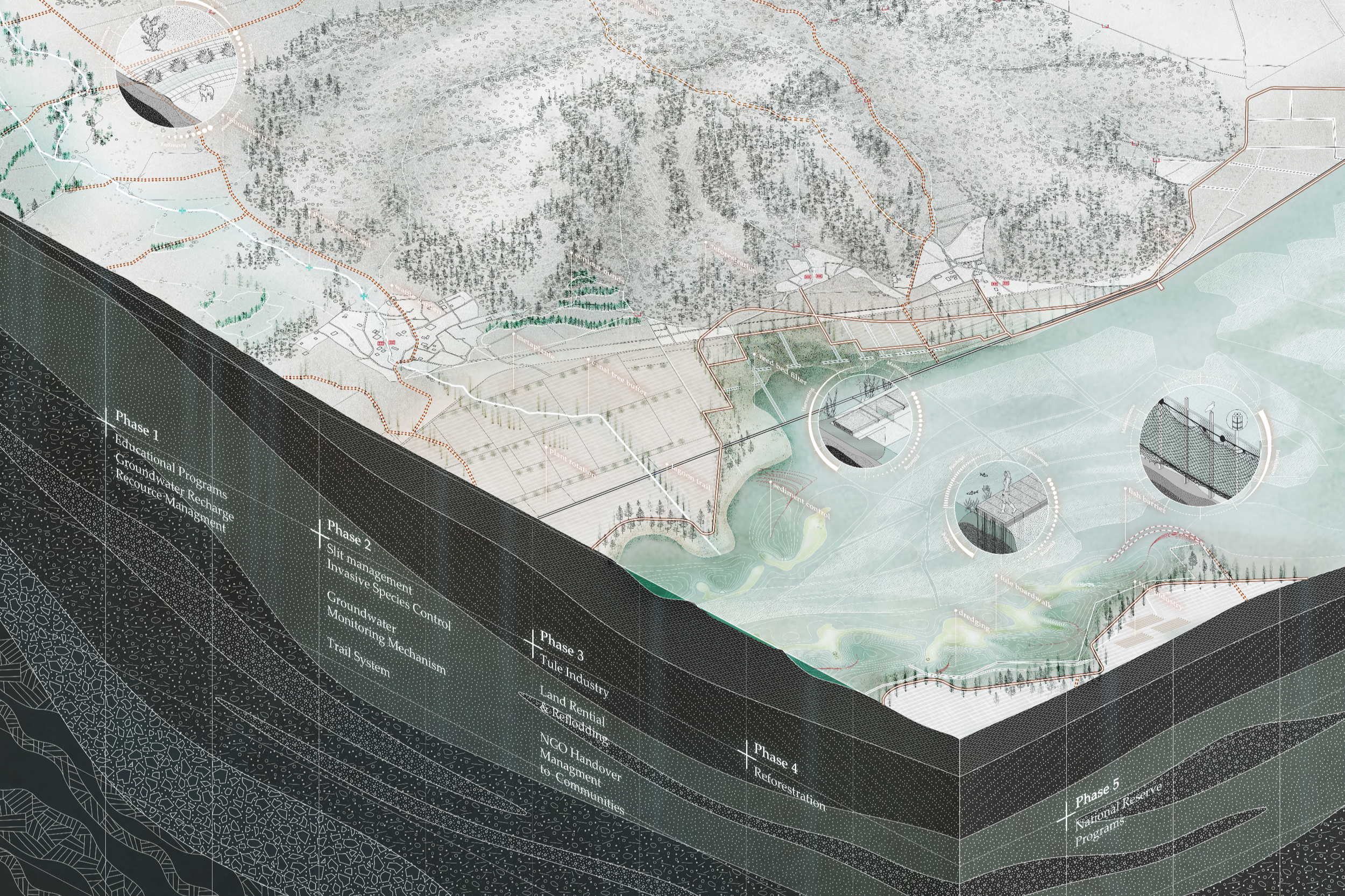
Tecocomulco Lagoon is one of the remaining lakes of the former Anáhuac system in the Mexican altiplano. It is a landscape under pressure, where erosion, aquifer depletion, and agricultural expansion are actively reducing its extent. What appears as a shrinking body of water is part of a broader territorial condition shaped by extraction and the gradual loss of hydrological balance. The project approaches the lagoon not as an isolated ecosystem, but as a connected system of ground, water, and cultivation. Its degradation operates across visible and invisible layers, from surface conditions to subsurface depletion and shifting relationships between communities and shared resources.
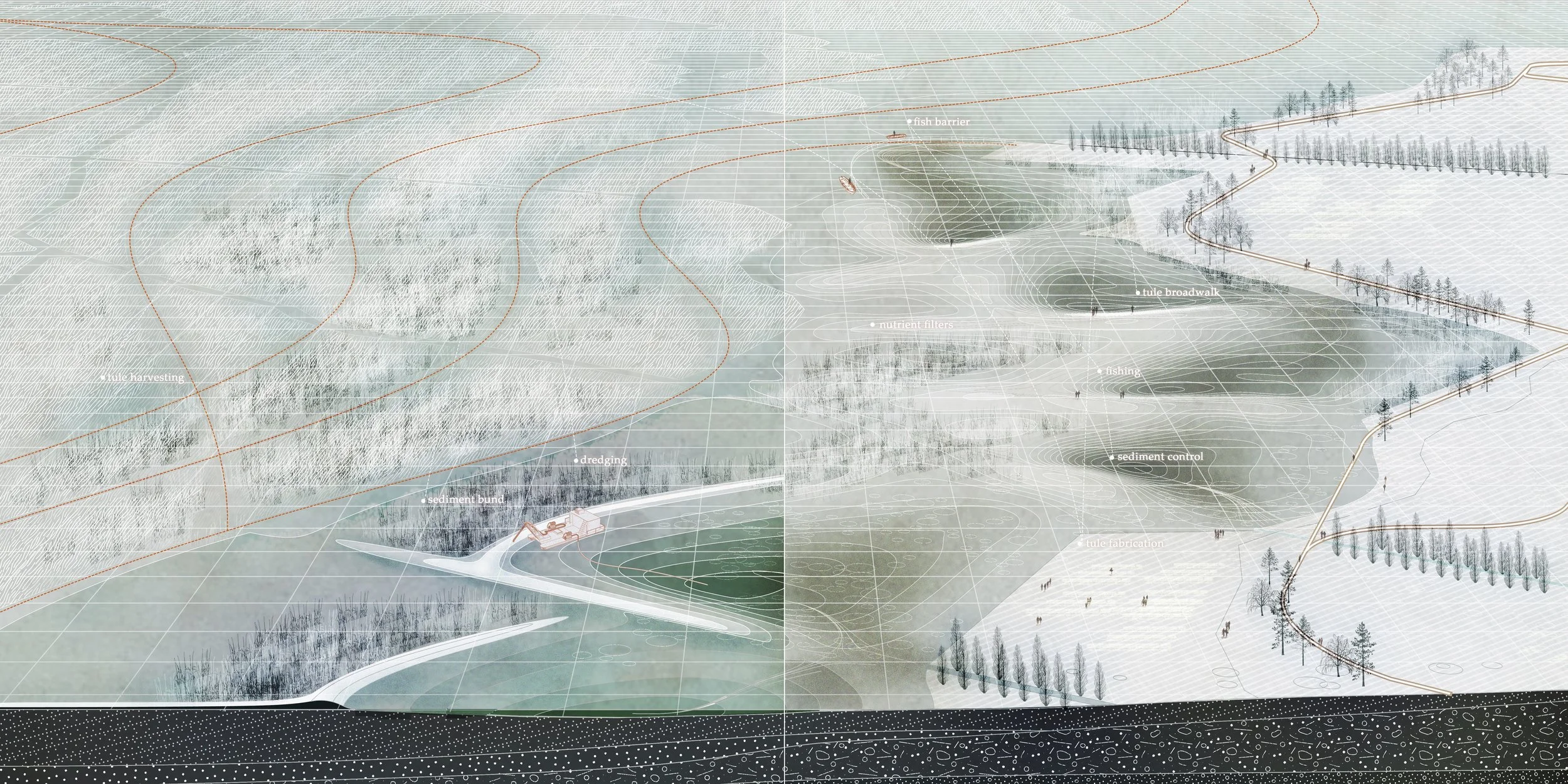
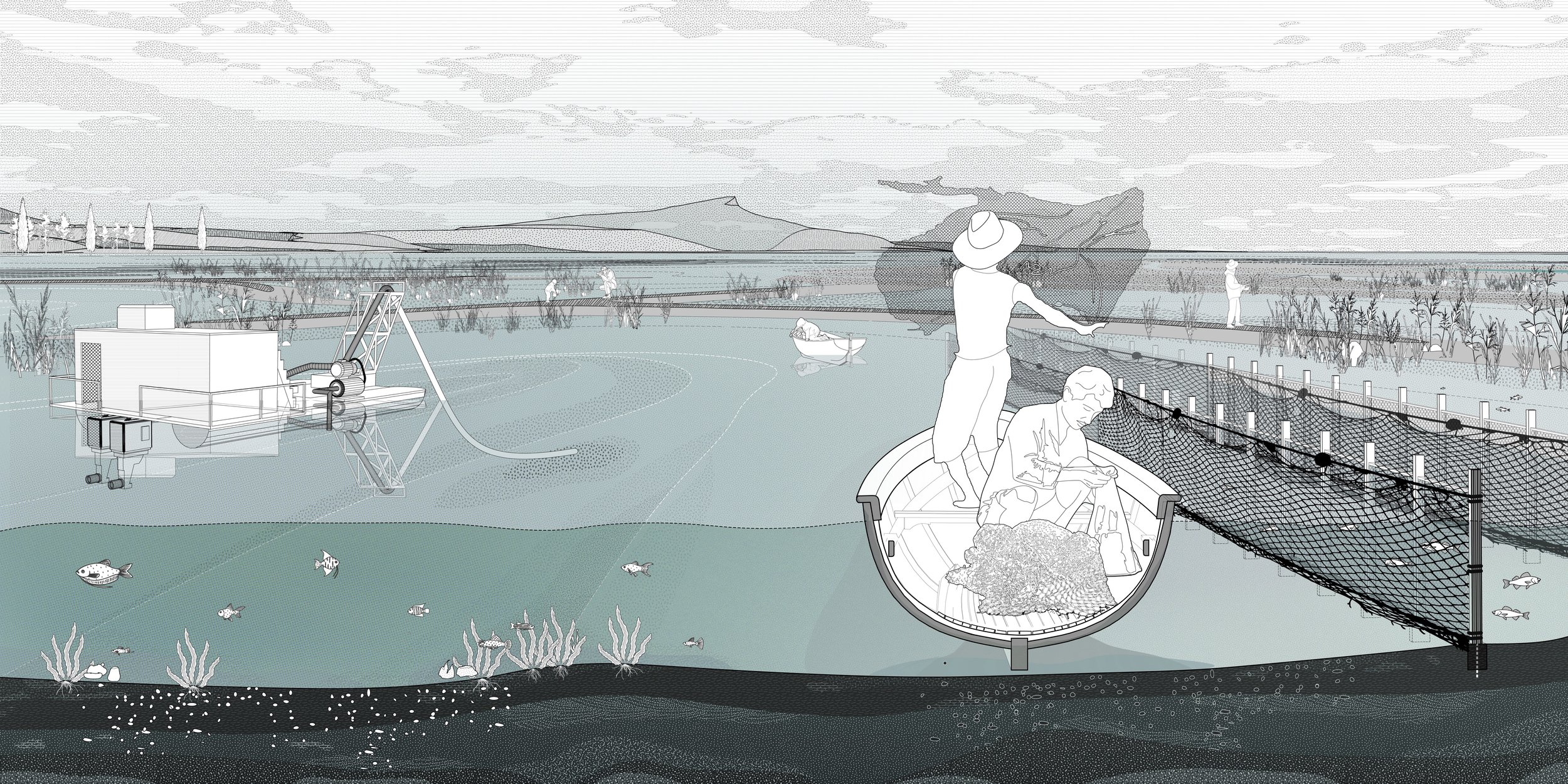
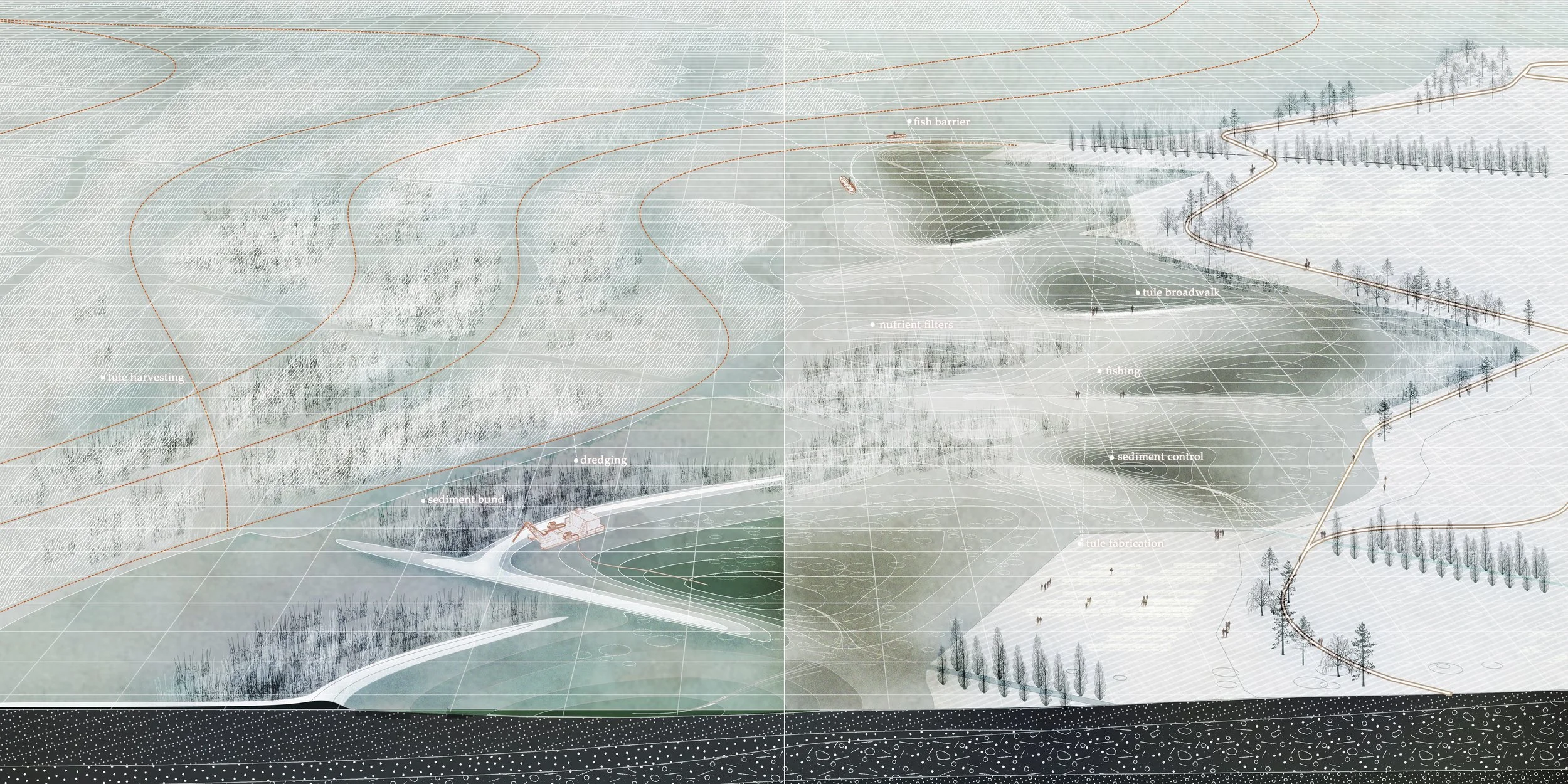
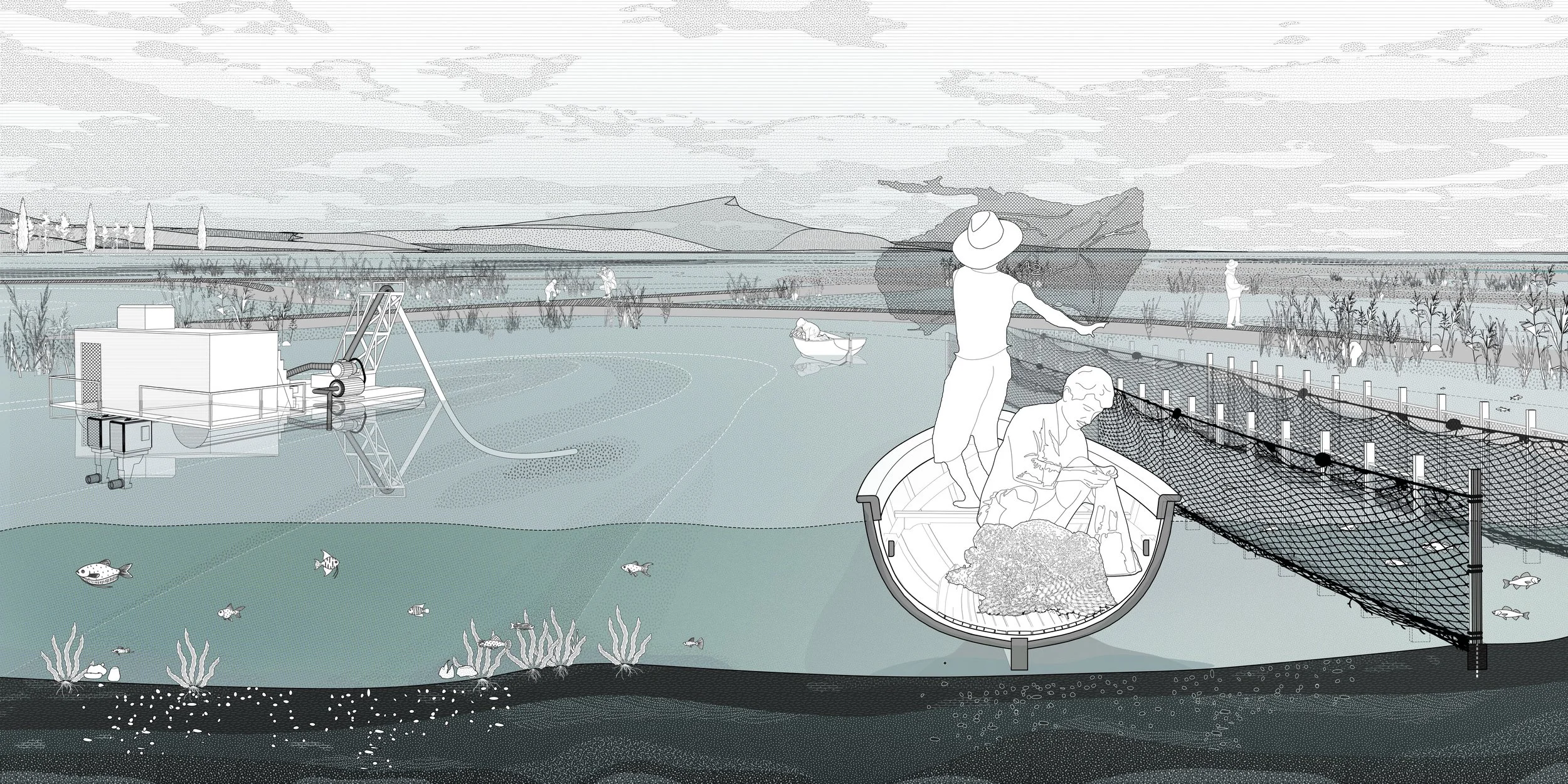
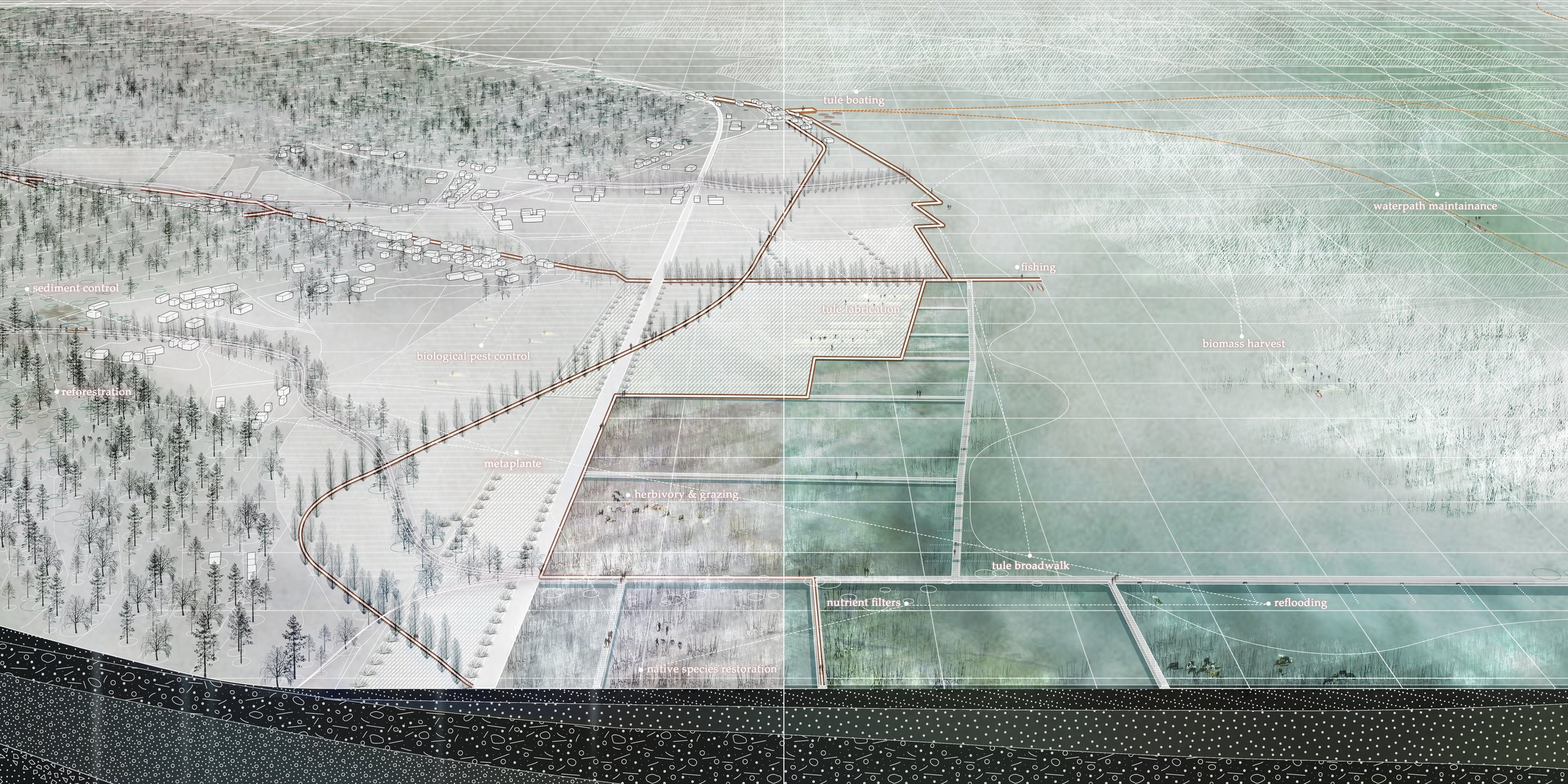
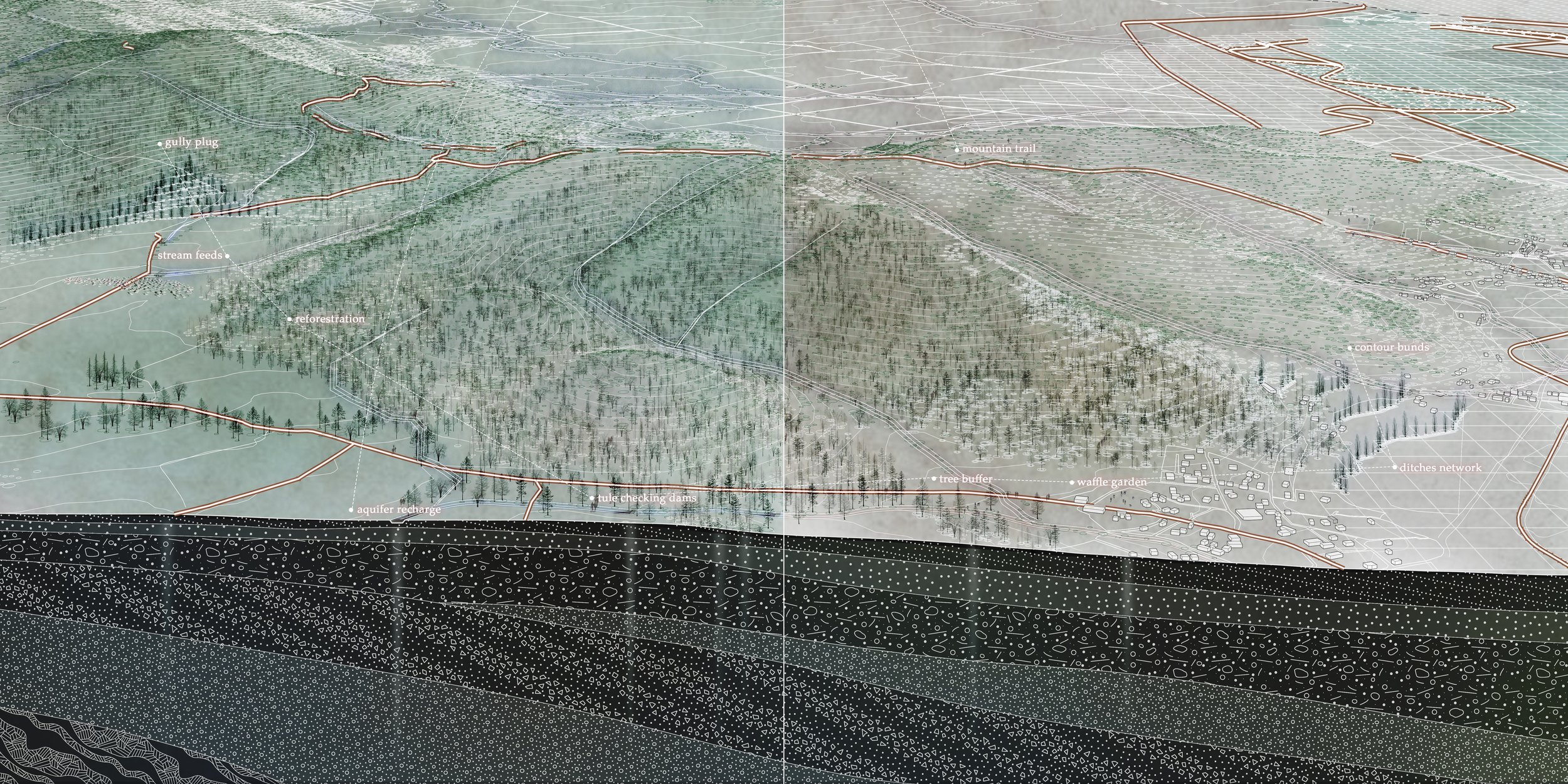
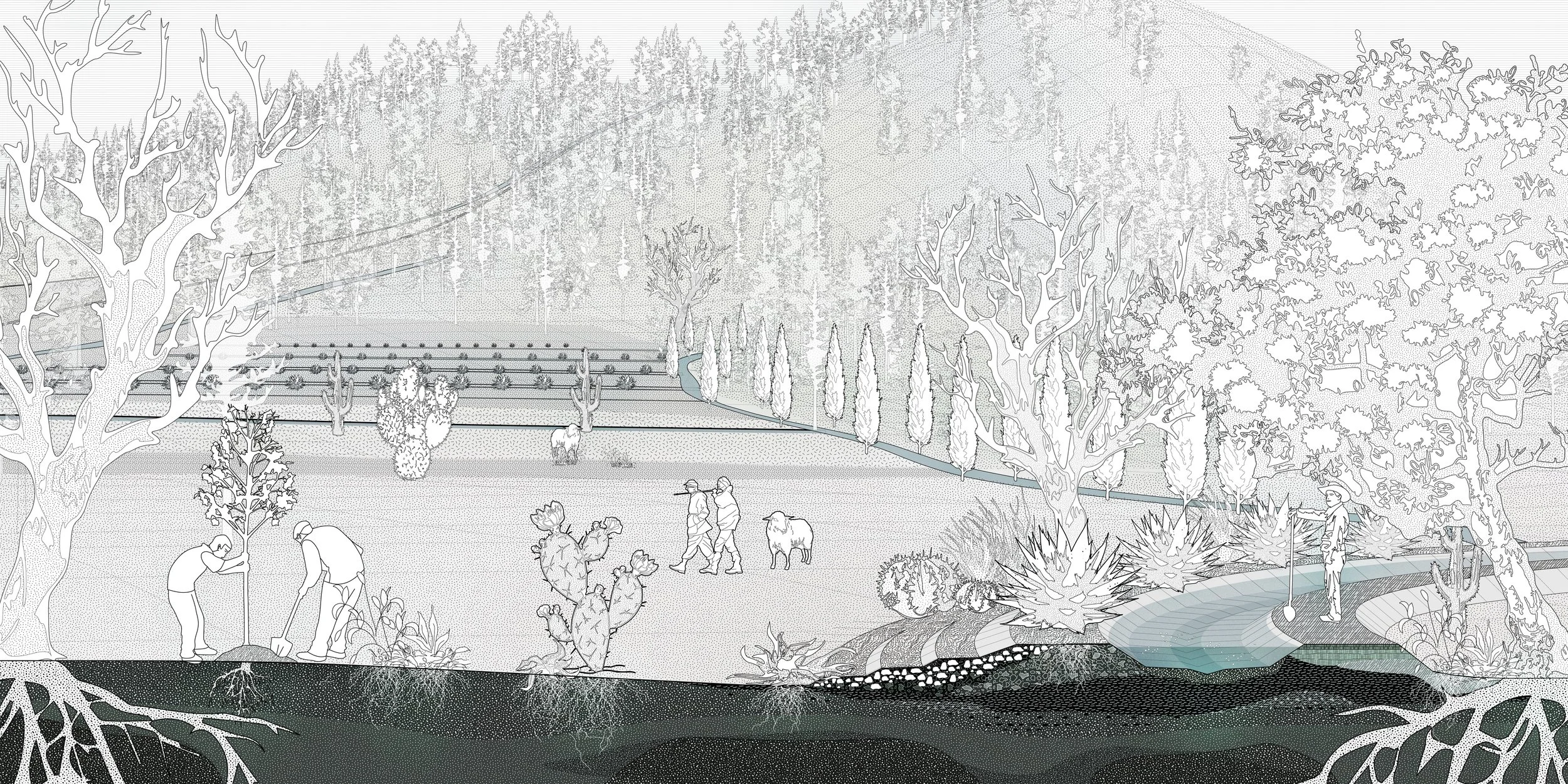
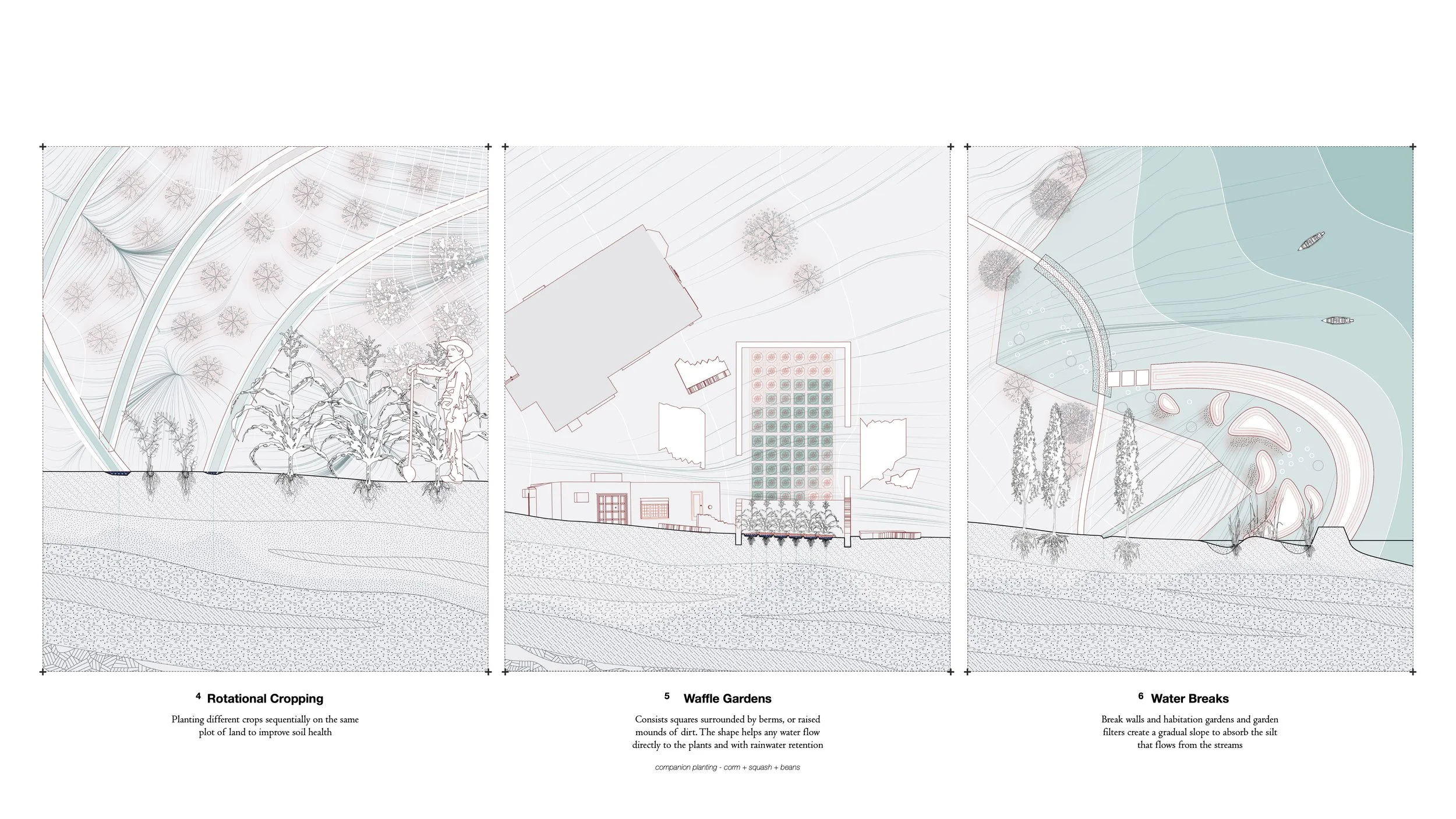
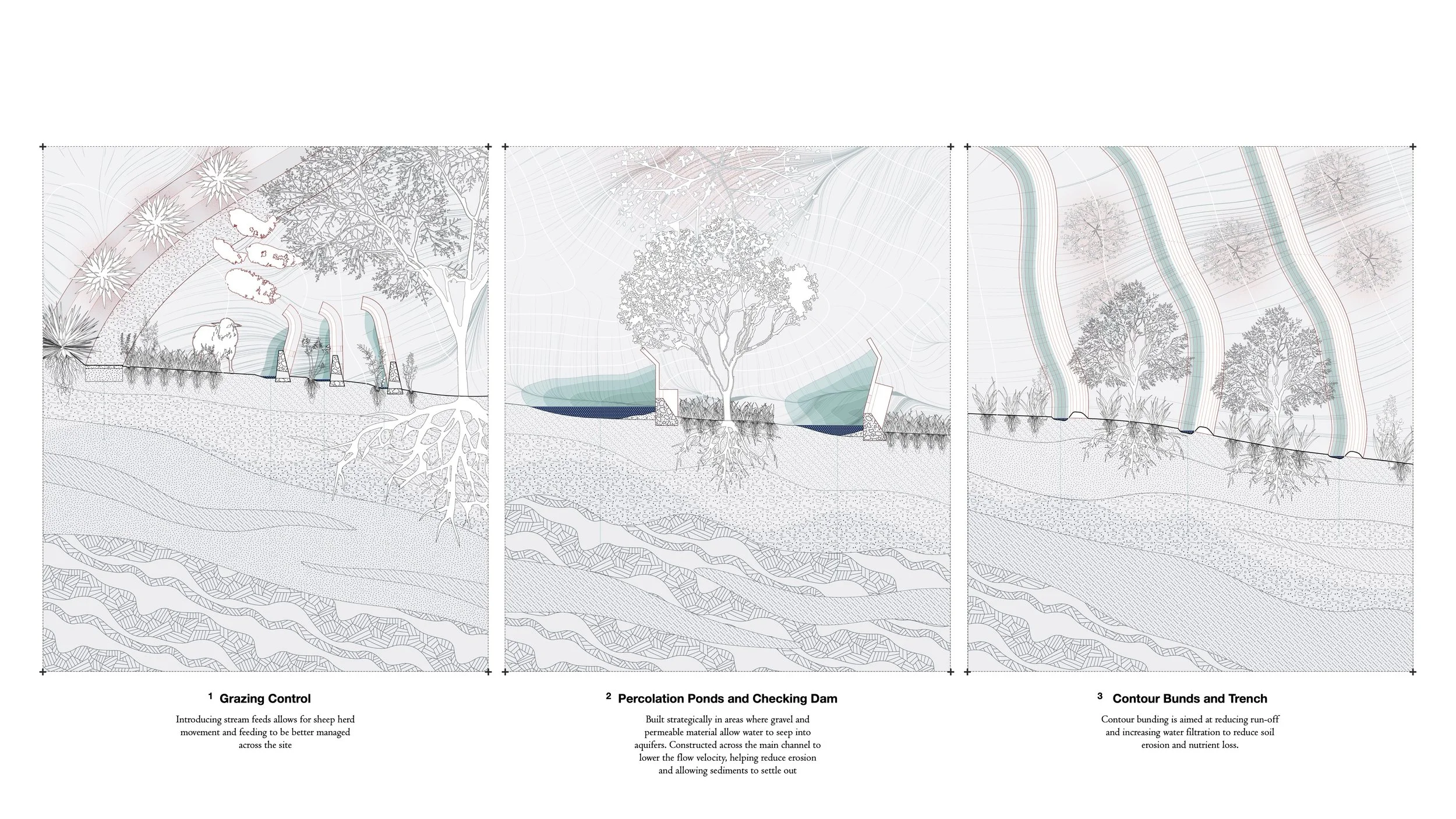
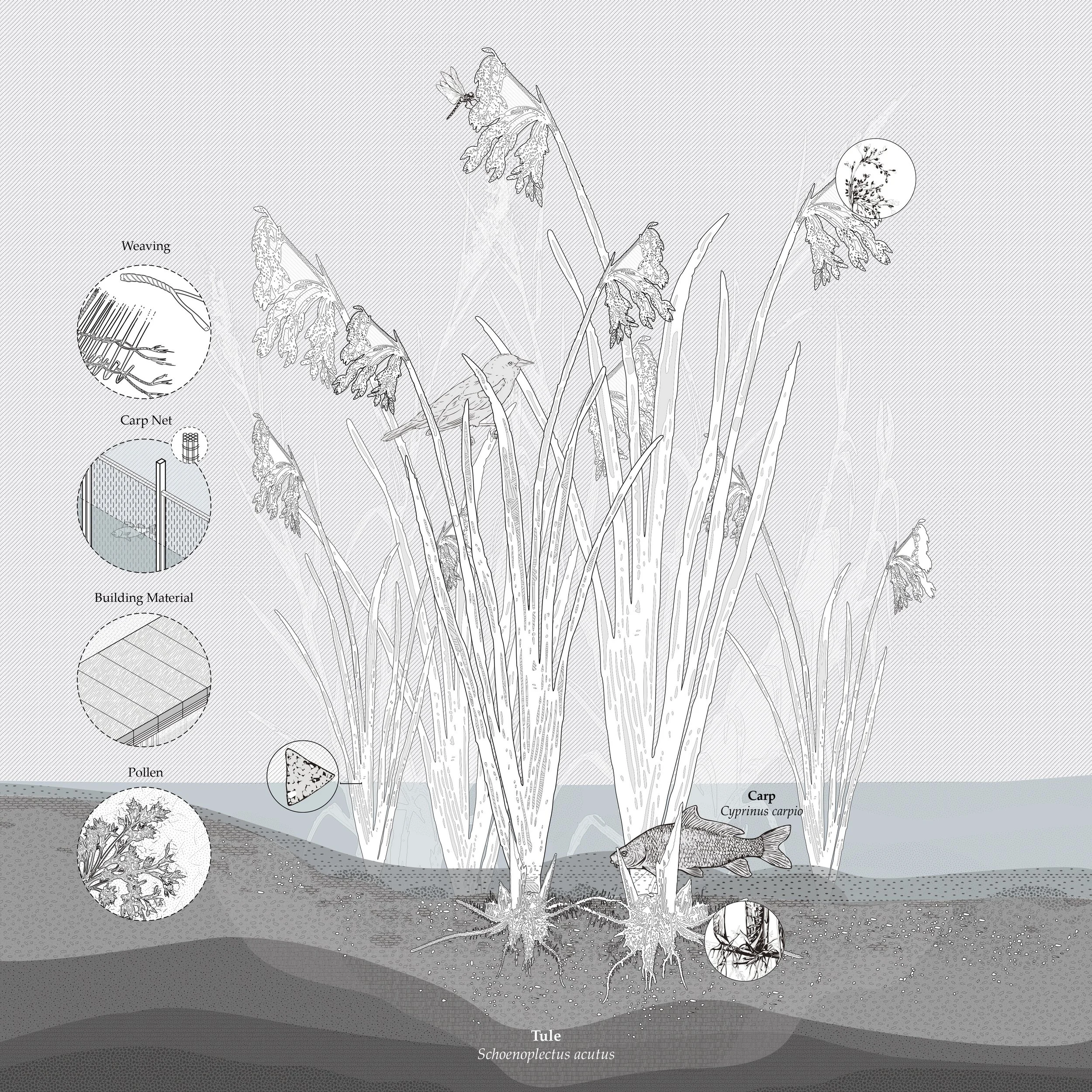
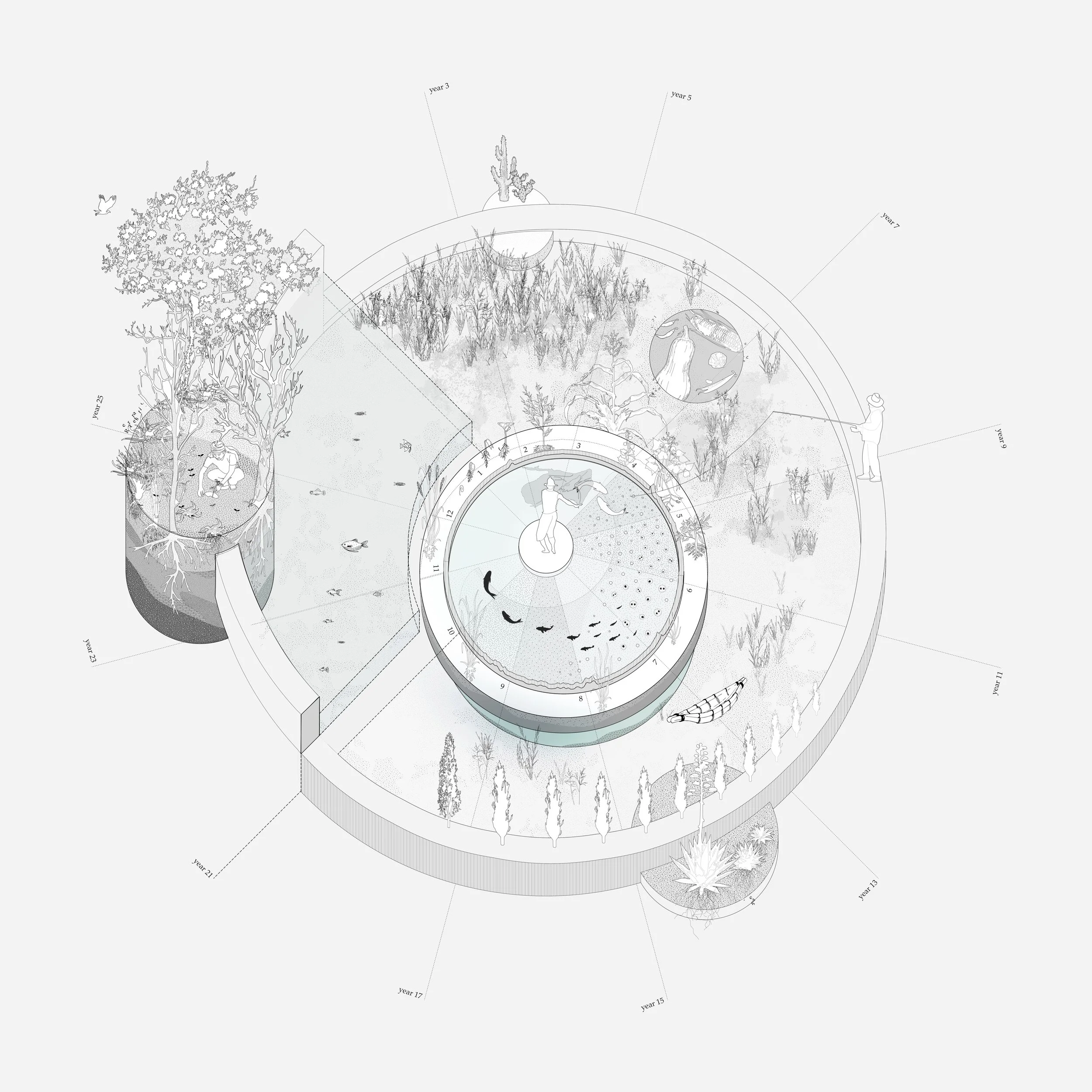
The proposal introduces a series of community-led interventions addressing different parts of this system. Upstream, small-scale infrastructures support groundwater recharge and sediment control. At the agricultural level, land use shifts from monoculture toward more diverse cultivation patterns. At the lagoon edge, controlled flooding and aquaculture redefine its boundary, allowing water systems and productive use to remain in negotiation. Within the lagoon, invasive plant material is selectively removed and repurposed for filtration systems and constructed walkways. These interventions are designed to be maintained collectively, embedding resource management within local practice over time.
Hidalgo, Mexico