Tawakol
Madinah, Saudi Arabia
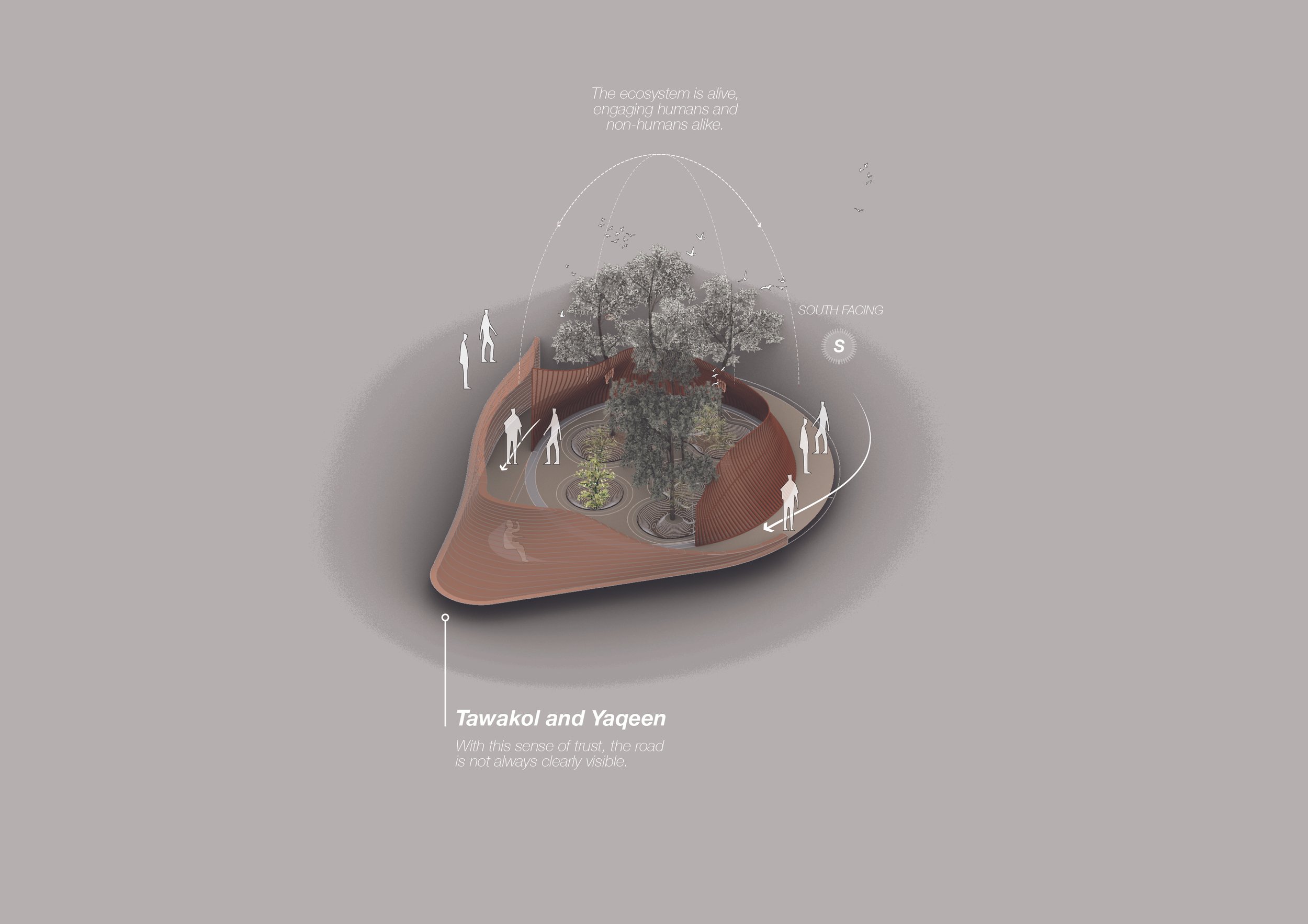
The design proposal draws inspiration from Salat al-Istisqa’ and unfolds as a spatial interpretation of a symbolic and embodied act of supplication. It is informed by gestures embedded within the ritual, including the notion of the quest itself, the reversal of the thob at the conclusion of prayer, and the foundational act of trust that structures the experience of seeking rain. Together, these gestures shape the project as a spatial condition defined by anticipation, surrender, and transformation, where inversion becomes a key spatial operation expressed through the turning of planes, the folding of surfaces, and the reorientation of the body within space.
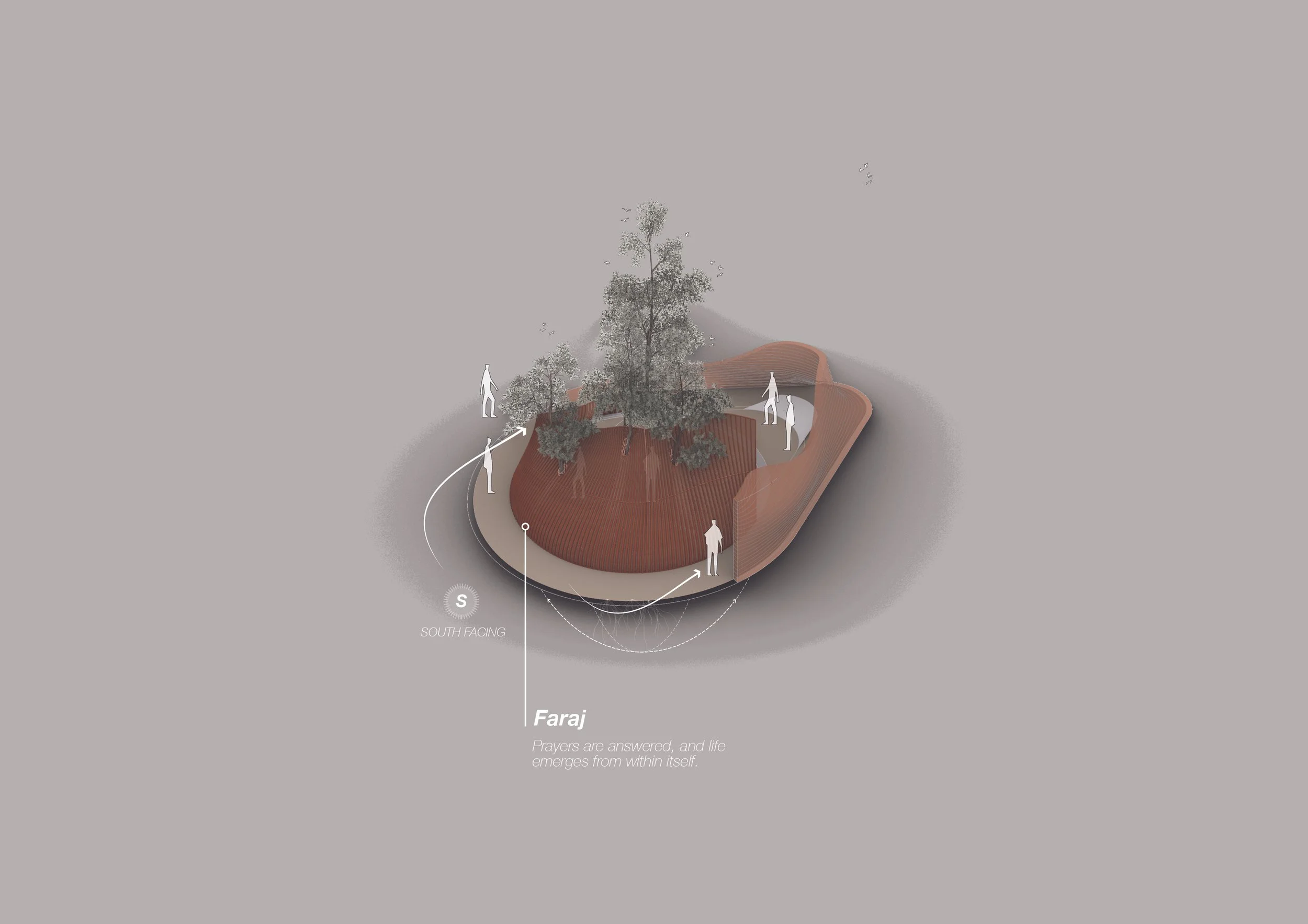
Within this framework, the project develops two interrelated states of experience: tawakkul combined with yaqeen, understood as a form of surrender grounded in certainty, and faraj, the emergence of relief following trust and patience. Rather than treating these as abstract concepts, they are translated into a spatial sequence that moves between enclosure and release, grounding and elevation, presence and openness.
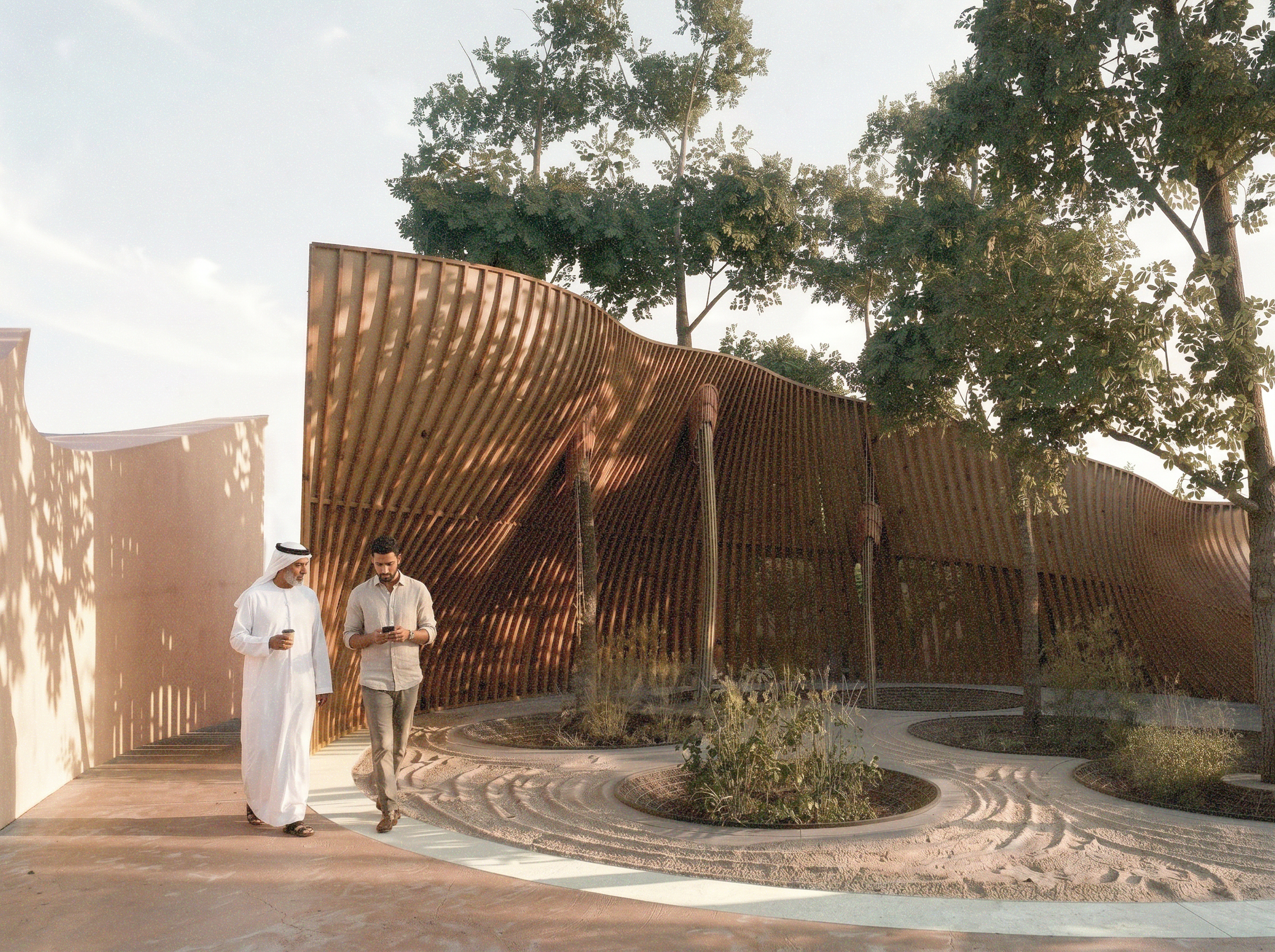
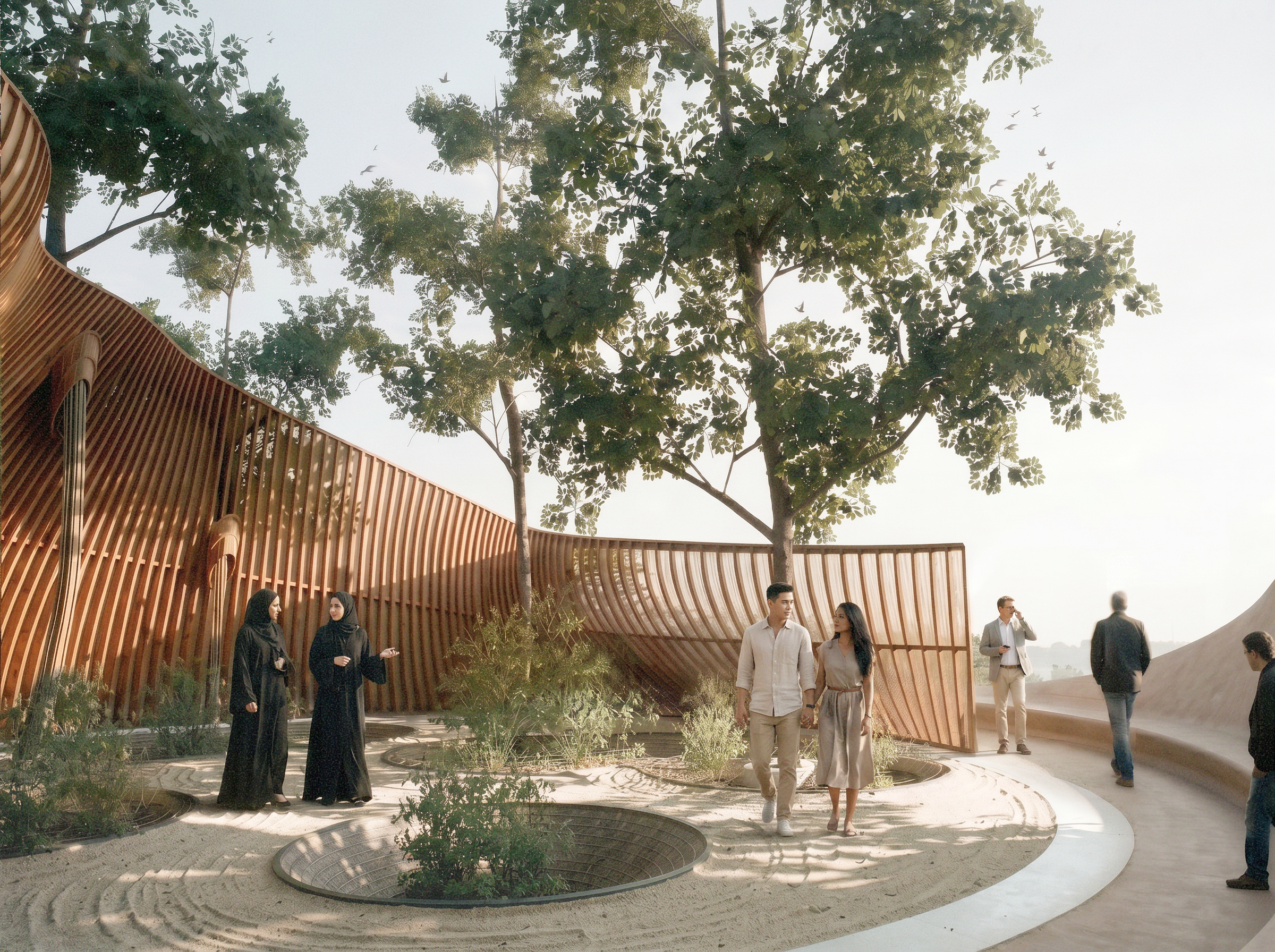
Material and form are derived from the surrounding landscape and context. A water-drop–like ground figure anchors the composition, around which an opaque wave-like structure traces movement through the site, forming spaces of reflection and pause. Within this form, seating is integrated as part of the landscape, allowing the body to remain within the spatial sequence of reflection and trust. The faraj condition is articulated through a woven system of palm stems, assembled to create controlled apertures that filter light and air, producing a gradual shift from enclosure toward permeability and openness.
The landscape is shaped through inverted mounds that embed planting within their form, emerging from the ground as constructed topographies that acknowledge the land’s capacity to sustain life. Five trees punctuate the site, their elongated trunks and restrained canopies giving them a sculptural and architectural presence within the composition. Low vegetation within the mounds works in relation to these trees to support shade, ecological continuity, and sensory qualities such as scent and sound. The project extends beyond the scale of installation into a civic and urban condition. It positions itself as a spatial gesture that invites collective gathering and reflection, allowing the narrative of trust, patience, and emergence to be experienced not only individually but within the shared fabric of the city of Al-Madinah.